Durable Shirts for Field Workers: 2026 Buying Guide
Table of Contents
- Durable Shirts for Field Workers: What Actually Holds Up
- Quick Comparison: Field Work Shirt Options at a Glance
- The Best Fabric for Work Shirts: Weave, Weight, and Blend
- Work Shirts for Hot Weather: Breathability and Heat Management
- Moisture-Wicking Work Shirts: Performance Fabric Explained
- Work Shirts for Storm Restoration: Built for the Worst Conditions
- Pricing, Care, and Total Cost of Ownership
- Sizing, Layering, and Inclusive Fit for Field Crews
- Frequently Asked Questions
Last Updated: October 9, 2026
Durable Shirts for Field Workers: What Actually Holds Up
The shirt on your back takes more abuse than any other piece of gear you own, rubbing against a climbing belt, snagging on hardware, soaking through before lunch.
At Line Life Supply Co., we build apparel for lineworkers, and crews ask the same question every season: what actually lasts?
Most buying guides rank shirts by comfort alone. But a soft shirt that tears at the shoulder seam after ten climbs is not a bargain at any price.
Quick Comparison: Field Work Shirt Options at a Glance
Use this table to match a shirt type to your work conditions before reading the detailed sections.
Shirt Type | Best For | Key Strength | Trade-Off |
|---|---|---|---|
Heavyweight cotton | Cool, dry climates | Abrasion resistance | Slow to dry |
Poly-cotton blend | Year-round general use | Balance of toughness and comfort | Less breathable than pure performance fabric |
Canvas | Heavy abrasion tasks | Maximum tear resistance | Stiff until broken in |
Twill | Daily field work | Smooth, snag-resistant surface | Mid-weight warmth |
Flannel | Cold-weather layering | Insulation | Bulky under a harness |
Performance knit | Hot, humid conditions | Moisture-wicking and stretch | Lower abrasion resistance |
The Best Fabric for Work Shirts: Weave, Weight, and Blend
The best fabric for work shirts balances fabric weight, weave density, and fiber blend: heavier fabric resists tears, a tight weave blocks snags, and the right blend controls drying speed.
Fabric weight is measured in ounces per square yard.
Weave matters just as much. A tight twill or canvas weave slides over rough surfaces instead of catching. Loose knits snag on everything from rebar to bucket truck doors.
Cotton vs. Poly-Cotton Blends: What Lasts Longer
Pure cotton wins on abrasion resistance and feels better against the skin, but holds sweat and dries slowly. A poly-cotton blend dries faster and resists shrinking, which matters when you layer and launder constantly.
For hard labor in moderate temperatures, we lean toward cotton or a cotton-dominant blend. In humid conditions, the synthetic content earns its place. Most crews end up owning both.
Canvas, Twill, and Flannel Compared
Canvas is the toughest option, built for jobs where you are dragging material and brushing against rough edges. It starts stiff and softens with wear. Twill is the everyday workhorse, smoother and lighter, with strong tear resistance. Flannel is a layering fabric, not a standalone work shirt, best reserved for cold mornings and off-shift wear.
Work Shirts for Hot Weather: Breathability and Heat Management
Work shirts for hot weather should prioritize breathability over raw fabric weight. A lighter, tightly woven shirt with underarm ventilation keeps you cooler than a heavy cotton tee, even though the heavy tee feels tougher.
Heat management comes down to airflow. Look for mesh panels, vented backs, and loose fits that let air move. Dark colors absorb heat, so lighter tones help on exposed job sites.
Moisture-Wicking Work Shirts: Performance Fabric Explained
Moisture-wicking work shirts move sweat to the fabric surface, where it evaporates faster. Performance fabric does this through fiber structure, not chemical coatings, so the effect lasts the life of the shirt.
That matters during hard labor: wet fabric clings, chafes, and pulls heat from your body once you stop moving.
The trade-off is abrasion resistance. Performance fabric generally wears faster against rough surfaces than canvas or heavy twill.
Work Shirts for Storm Restoration: Built for the Worst Conditions
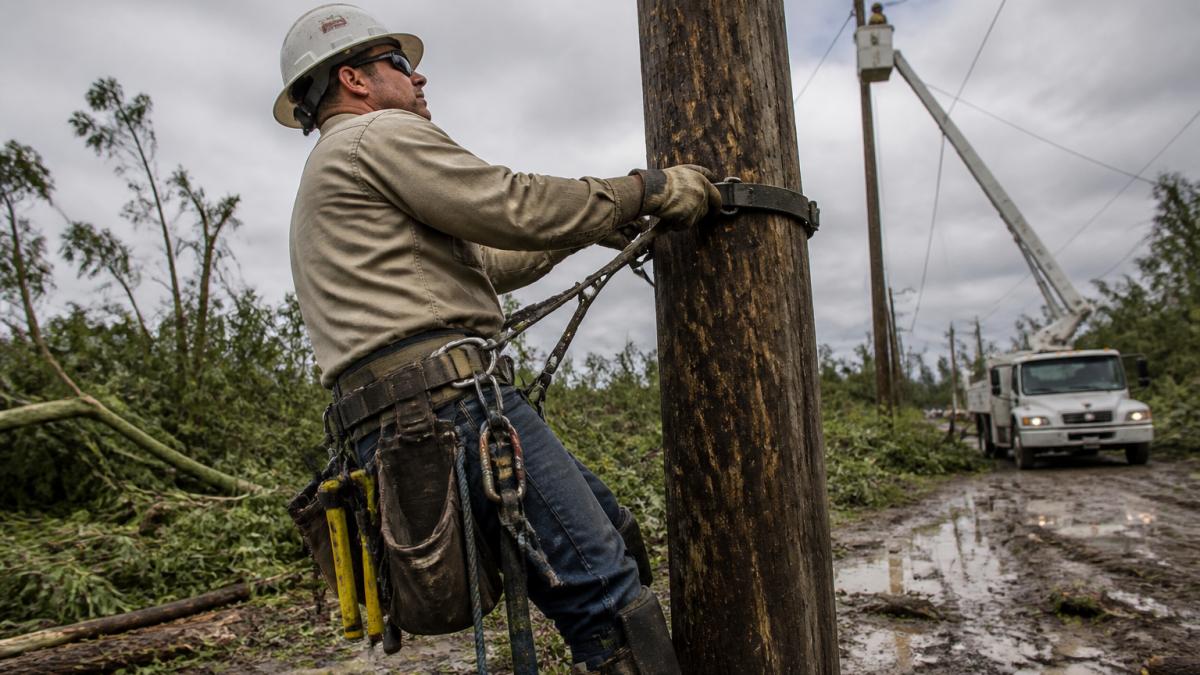
Storm restoration is its own category of field work, with shirt requirements that differ sharply from routine jobsite wear.
What Storm Crews Actually Need From a Shirt
Fast drying over raw toughness. During restoration, you are wet for hours at a time, often in wind.
Snag resistance at the shoulders and forearms. Storm debris is the enemy of loose knits; tight twill and canvas weaves slide over broken branches, splintered poles, and hardware instead of catching.
Reinforced stress points. Look for double-stitched shoulder seams, bar-tacked pocket corners, and reinforced elbows.
Layering clearance under rain gear. Storm shirts need to fit cleanly under a rain shell without bunching at the shoulders or riding up when you reach overhead.
Occupation-Specific Notes for Storm and Restoration Work
The right shirt depends on which part of the restoration you are doing:
- Line and pole work: Long-sleeve mid-weight twill or performance blend with reinforced elbows. Sleeves protect forearms from abrasion against poles and hardware, and from incidental sun exposure during long daylight shifts.
- Vegetation and right-of-way clearing: Heavier canvas or a canvas-blend shirt. Chainsaw work and brush dragging chew through lighter fabrics quickly, and the extra abrasion resistance pays for itself within a single storm rotation.
- Roadside and traffic control: A light-colored, high-visibility-friendly shirt is easier to see in low light. If your role places you near moving traffic, check your employer's policy on high-visibility apparel before assuming a standard work shirt is enough.
A Note on Safety and Compliance
Work shirts are not personal protective equipment. If your task requires arc-rated or flame-resistant clothing, high-visibility garments that meet a recognized standard, or other job-specific protective apparel, a standard durable work shirt does not satisfy that requirement. Confirm the specific hazard assessment and employer policy for your role before relying on any shirt for protection. Durability and comfort are the shirt's job; certified protection is a separate category of gear.
Pricing, Care, and Total Cost of Ownership
The cheapest shirt is rarely the least expensive. A low-cost shirt that fades, tears, or shrinks after a few washes gets replaced several times a year, while a well-made shirt can last multiple seasons with proper care. The useful question is not today's price but cost per wear across its working life.
How to Think About Cost Per Wear
Cost per wear is simple arithmetic: purchase price divided by the number of wears before the shirt fails. A shirt that costs more up front but lasts three times as long usually wins, especially once you factor in the hassle of replacing it mid-season.
A common pattern among field crews: a low-cost shirt fails within a single season of hard use, while a well-constructed mid-weight work shirt holds up for two to three seasons of the same work.
Care, Laundering, and Repair: What Actually Extends Lifespan
How you wash and repair a work shirt affects its lifespan as much as the fabric does. Heat is the biggest enemy of workwear fibers, and most premature failures trace back to laundry habits rather than the fabric itself.
Washing
- Wash in cold water on a normal cycle. Hot water accelerates fiber breakdown and shrinkage, especially in cotton-dominant fabrics.
- Turn shirts inside out before washing to protect the outer weave from abrasion against zippers, buttons, and other garments in the load.
- Use a standard detergent without added bleach or fabric softener. Softener coats performance fibers and reduces their ability to wick moisture.
Drying
- Air dry whenever possible. If you must use a dryer, choose low heat and remove the shirt while still slightly damp.
- High heat is the fastest way to shrink cotton and degrade the stretch and wicking of performance knits.
- Hang shirts on a sturdy hanger or lay them flat rather than draping them over a hot surface.
Stain Treatment
- Treat stains promptly. Grease, oil, and hydraulic fluid set over time and become nearly impossible to remove after a hot wash or dryer cycle.
- For oil and grease, apply dish soap or a dedicated pre-treatment directly to the stain, work it in gently, and let it sit before washing.
- For mud and clay, let the stain dry, brush off the loose material, then pre-treat and wash. Washing wet mud pushes it deeper into the weave.
Repair
- Repair small tears and loose seams before they spread; a five-minute repair at the shoulder seam prevents a mid-shift failure later.
- Reinforce high-wear points like pocket corners, elbow seams, and button plackets with a stitch or patch before they fail.
- Keep a repair kit in your truck or locker: needle, heavy-duty thread, buttons, and matching fabric patch.
Rotation and Dedicated Sets
Rotate at least three or four shirts so no single one wears out first. Rotation spreads the abrasion load and gives each shirt time to dry fully between uses, reducing fiber stress.
Keep a dedicated set for the dirtiest jobs and one for lighter days. Shirts worn for the heaviest work take the most abuse, so separating them from your general rotation keeps your better shirts in service longer.
If you are outfitting a whole crew, bulk orders are worth asking about before you buy piece by piece.
Sizing, Layering, and Inclusive Fit for Field Crews
Fit affects durability as much as fabric does: too tight pulls at the seams and restricts mobility, while too loose catches on equipment and hardware.
For layering, size up slightly so a base layer fits underneath without binding. Look for gusseted underarms and articulated elbows, which add range of motion without bulk. Field crews come in every build, so a range of sizes and unisex options means everyone gets a shirt that actually fits.
If you are outfitting a whole crew, bulk orders are worth asking about before you buy piece by piece.
Frequently Asked Questions
What are the most durable work shirts for field workers?
Durability comes down to fabric weight and construction, not brand labels. Look for shirts in the 6-8 oz range with double-stitched seams, reinforced elbows, and bar-tacked stress points. Poly-cotton blends in a twill or canvas weave resist tearing and abrasion better than thin 100% cotton tees. For lineworkers climbing poles and handling tools daily, a mid-weight blend with four-way stretch gives you toughness without restricting mobility.
Are cotton or polyester shirts better for field work?
Neither wins outright. Cotton breathes well and feels comfortable in mild conditions, but it holds sweat and dries slowly, which works against you in heat or rain. Polyester moves moisture away from your skin and dries fast, though it can hold odors without a treatment. A poly-cotton blend gives you most of cotton's comfort with polyester's moisture-wicking and quicker dry times, which is why blends dominate field work shirts.
How do I keep work shirts from wearing out quickly?
Wash in cold water and skip the dryer when you can, since heat breaks down fibers and shrinks stitching. Turn shirts inside out to protect the outer face from abrasion in the wash. Pre-treat grease and grime before washing instead of scrubbing hard, which thins the fabric. Rotate at least four or five shirts so each one gets rest between wears, and repair small tears early with a patch or stitch before they spread.
What features should I look for in a storm restoration work shirt?
Storm work means rain, wind, and long shifts, so prioritize quick-drying performance fabric and a fit that layers under rain gear without bunching. Long sleeves protect forearms from abrasion and sun. Look for reinforced stitching at the shoulders and chest, since those take the most strain when you're pulling cable or climbing. A henley or button-down gives you ventilation options as conditions shift.
Field work punishes cheap gear, and your shirt is the first thing to show it. Line Life Supply Co. builds apparel for lineworkers who need clothing that survives the climb, the storm, and the long shift after. Our shirts are designed for comfort and durability on and off duty, with styles that honor the trade and fit the whole crew. Get started with Line Life Supply Co. and gear up with apparel built to last.